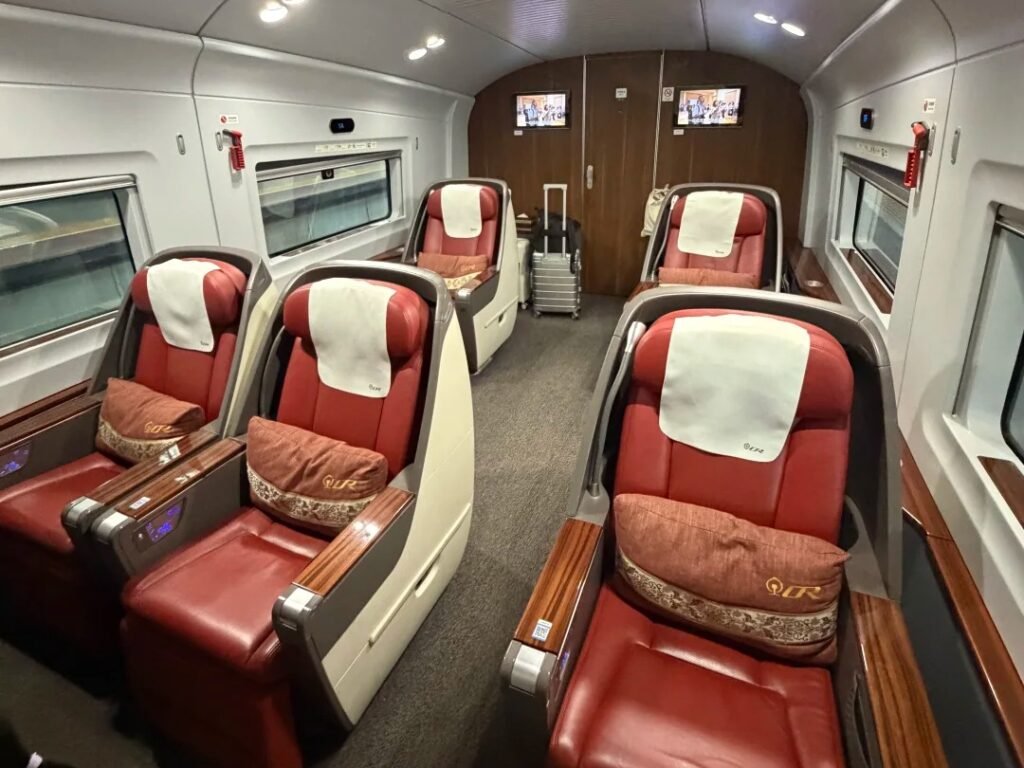
Choose a train class by the journey you will actually make. A longer daytime ride may justify extra room, while a short transfer may not. The class label alone does not confirm a particular seat design, lounge or meal; check the train and service details attached to the ticket you are considering.
Decide what you need
Compare space, seating arrangement, luggage handling and the ability of your party to sit together. If quiet work or rest is the priority, look at the actual layout where available. For travelers with limited mobility, the route through the station and onto the train may matter more than the seat upgrade itself.
Include station logistics
Premium seating does not remove the need for correct identification, security screening and reaching the appropriate gate. Arrange enough time to navigate the station. Check the full departure and arrival station names, because a city may have several. Carry the identity document used for the booking and keep train details accessible offline.
Compare the complete cost
Ask what happens if the requested class is unavailable and whether a substitution needs your approval. Review change and refund conditions through the booking channel before paying. Consider spending on a convenient station transfer or better-located hotel if those improve the day more than the seat does. This is a planning comparison, not a first-person review of a train we have ridden. The best choice is the lowest level of complication that meets your own comfort needs.
Official references and further reading
References checked 6 September 2026. Recheck operational requirements before travel.